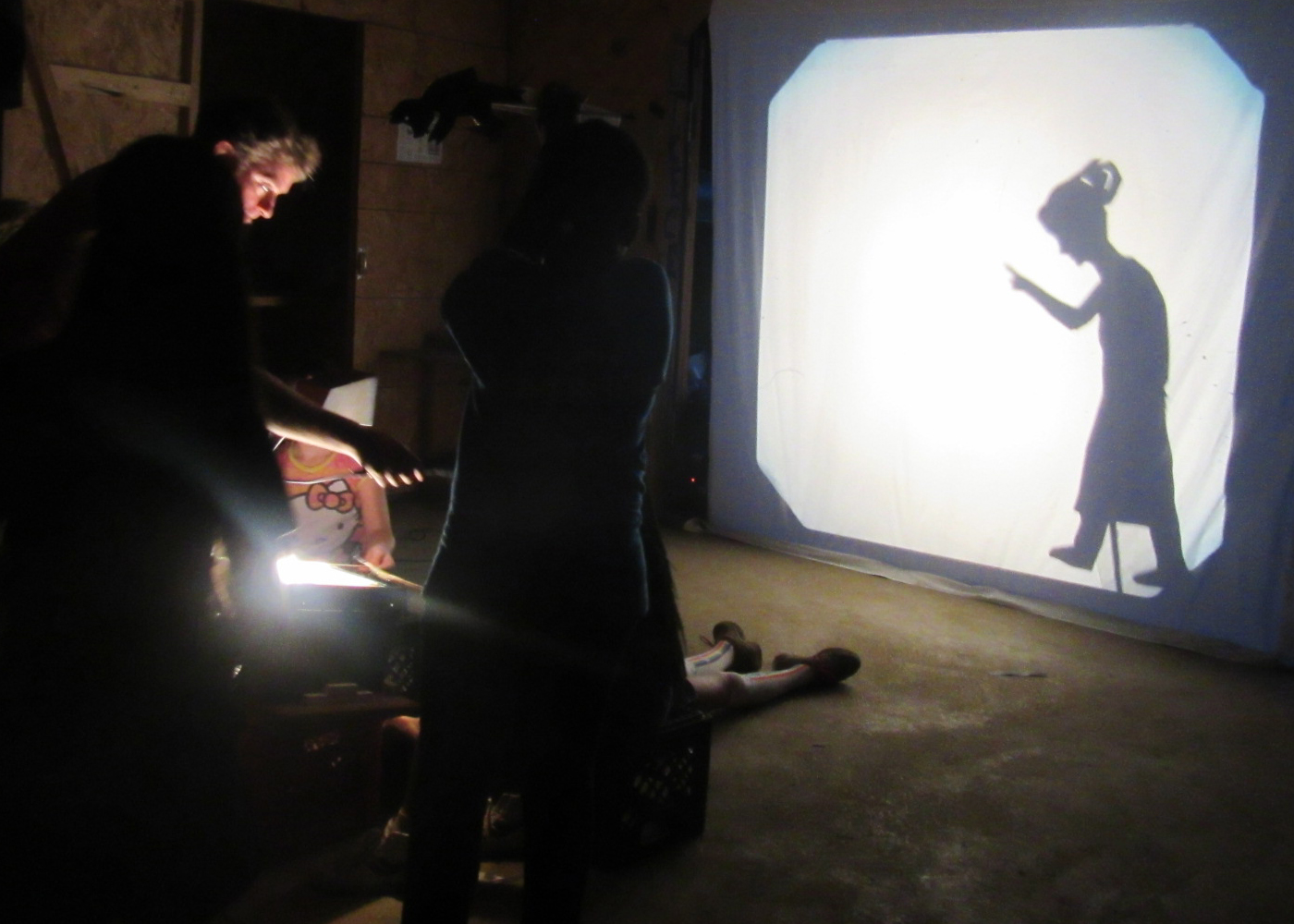
The iPhone and the invention of smart phones is probably one of the most notable new technologies that have brought new life to the art of Puppetry, but it is certainly not the only one.
Puppetry has transformed before over the years, as new technologies became available. It is hard to realize now, but Jim Henson was taking advantage of new technologies when he made the Muppets. Before Jim Henson most puppets were made from cotton, paper and wood, not from Foam or Fleece. As I like to point out to people, Elmer’s Glue was also a new technology. Older glues, such as wheat paste and wallpaper paste, take much longer to dry, and are vulnerable to mold while drying. Also there is nothing worse than having your puppet eaten by mice, which can happen if you use wheat paste. Yet not all new technologies from the 20th century are worth keeping. Plastic Wood was a toxic resin that replaced paper mache. In that case we replaced something cheap and safe with something very expensive and poisonous to the puppet builder.
It shouldn’t surprise us that new innovations are coming to the art of puppetry in the computer age, and I am excited to see what people do with them. It has become much easier to record and watch video. Any parent now can set up a phone to record puppet shows with their kids, and can immediately sit on the couch and watch them. Professional puppeteers can rehearse and then watch a video of that rehearsal for feedback. This is something that should improve all performances, but puppeteers more than others. Otherwise puppeteers need to use a mirror and that can be very hard watching the puppet move while also watching what it looks like in the mirror.
Other innovations have come on the home computer, although a lot of these technologies are also available on your mobile device. Adobe Premire Pro offers a wonderful suite of video editing software, which works even on my 8 year old PC. The free trial runs out much sooner than you would like, however, and the price tag on this software is not yet affordable for most people. Other software also exists, such as VSDC free Video Editor. While it might not be as easy to use as Adobe, and it doesn’t have all the same features, it is free. Anybody now can take their video, crop it, add music to it and then share it on the internet.
Social media in many ways has transformed the landscape for all performers. This is easiest to see this with musicians, who have been using the internet as their demo tape for years. Nobody now would dream of hiring a band without finding a short video of them play on the internet. Other live performers, such as Jugglers, Clowns, Magicians, and Puppeteers, should be following their example. Social media can also change the way we invite people to performances and it allows us to build a following of fans much easier than before. Of course, with social media you can also skip making live performances altogether and just make your own Television channel on YouTube.
One of the things that excites me the most is how easy it is now to make stop animation films. I personally like the program Lapse it Pro, which allows the user to set up your phone on a tripod and will take photos at regular intervals. You can adjust the app so it takes photos every few seconds or minutes, and it will keep taking photos while you work. After the project is done, you can remove bad photos from the series, and choose a speed to render the photos into video. Now, I can show people how I made the puppet in a video that only lasts a few seconds. Most people can only imagine how I build puppets if they see me building them with their own eyes, and and now I can show them in a video that looks really cool. As I work with summer camps this year building puppets I am going to make sure that children get a chance to use this new app, and I look forward to showing you what they make.
Overall, the changes coming ahead to the art of puppetry should be exciting and fun to watch. New technologies and new forms of art are not going to replace old ones, but they will make older art forms, such as puppetry, easier to share and easier to create.